Built for security
Capability-based isolation and hardware-enforced process boundaries.
 InterOS
A new foundation for mobile
A modern, independent, open development platform for smartphones with a focus on isolation, security, and user control. Built in Rust for real mobile experiences—not adapted from a desktop OS.
Capability-based isolation and hardware-enforced process boundaries.
A modern, touch-first experience built for mobile hardware.
Memory safety and reliability are design priorities from the ground up.
A clear development record and an independent ecosystem.
Native apps, technical tools, and an extensible platform.
Architecture
InterOS uses a microkernel-oriented design with explicit security boundaries, hardware abstraction, and a focused userspace. The diagram summarizes the intended separation of responsibilities; see the source for implementation details.
Source code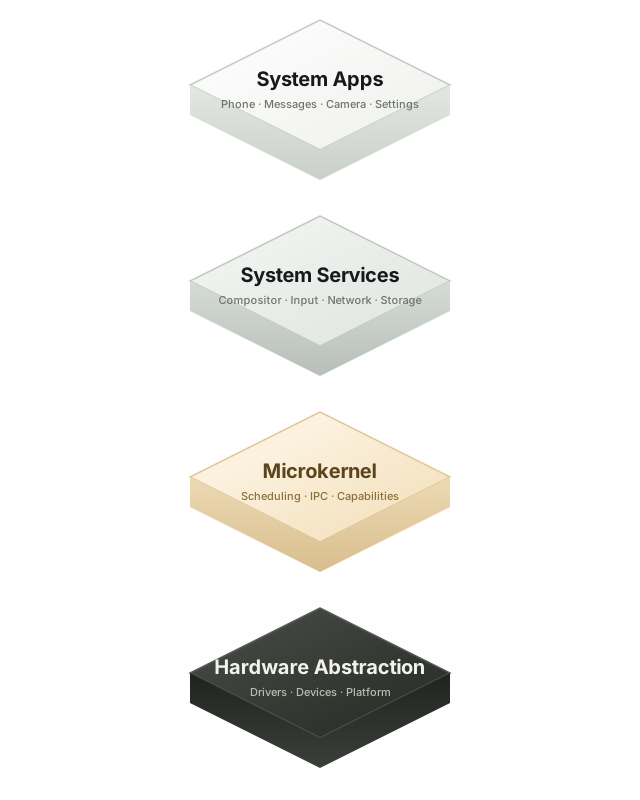
Native experience
InterOS is building a native interface around everyday smartphone tasks, with a consistent visual language and explicit boundaries between system components.
Interface renders shown on this page are design concepts from the InterOS UI kit, not device captures; source-verified screenshots from a running QEMU guest will replace them as verified assets become available.
Review platform documentationCalling and messaging surfaces designed for one-handed, distraction-free use.
Fast capture with a quiet, content-first gallery for photos.
A focused web surface plus a small set of considered native apps.
Clear controls and honest values served by authoritative system services.
Current status
InterOS is under active development, with QEMU as the primary development and demonstration environment. Status labels distinguish the current target from work still underway.
Canonical emulator target. A fresh local end-to-end run is still required to confirm current runtime behavior.
Active development targetSource and subsystem tests exist; end-to-end app usability and lifecycle acceptance still need local validation.
Implementation in progressSource-level architecture targets; current runtime behavior must be verified independently for each target.
Runtime validation pendingArbitrary Android APK execution is not supported yet; physical-phone bring-up remains experimental.
Experimental — not production-readyThis page is a project overview, not a certification or independent security audit. Follow the repository for current code and verification evidence.
For developers
InterOS Core is developed in the open — clone the repository, read the docs, and follow the build guides to run it in QEMU. Contributions and issue reports are welcome.
git clone https://github.com/Bharathcoorg/inter-os-core.git
cd inter-os-core
# build and QEMU run guides live in /docsSponsors
InterOS is independent, community-driven development. A sponsorship program with backing tiers and supporter recognition is on the way.
Coming soonGet started
Read the source, try the live demo, and follow InterOS as it develops.